


Key takeaways
A position that grew into most of your net worth is a different problem from one you chose at that size. Concentration you drifted into deserves a deliberate decision.
Sequence matters. Get the professional team in place before you tell anyone else, and before you move anything.
Rebalancing does not have to mean selling. Borrowing, gifting, charitable structures, and simply stopping new purchases all reduce concentration.
If you do sell, the tax is the whole game: which lots, which year, and what offsets are available.
Gifts to family beat loans for keeping relationships intact, and they need documenting properly.
Digital assets appreciate in a way that rewrites a balance sheet before you notice. A position that was 5% of your net worth becomes 60% without you making a single new decision. Here is how to handle the other side of a run-up.
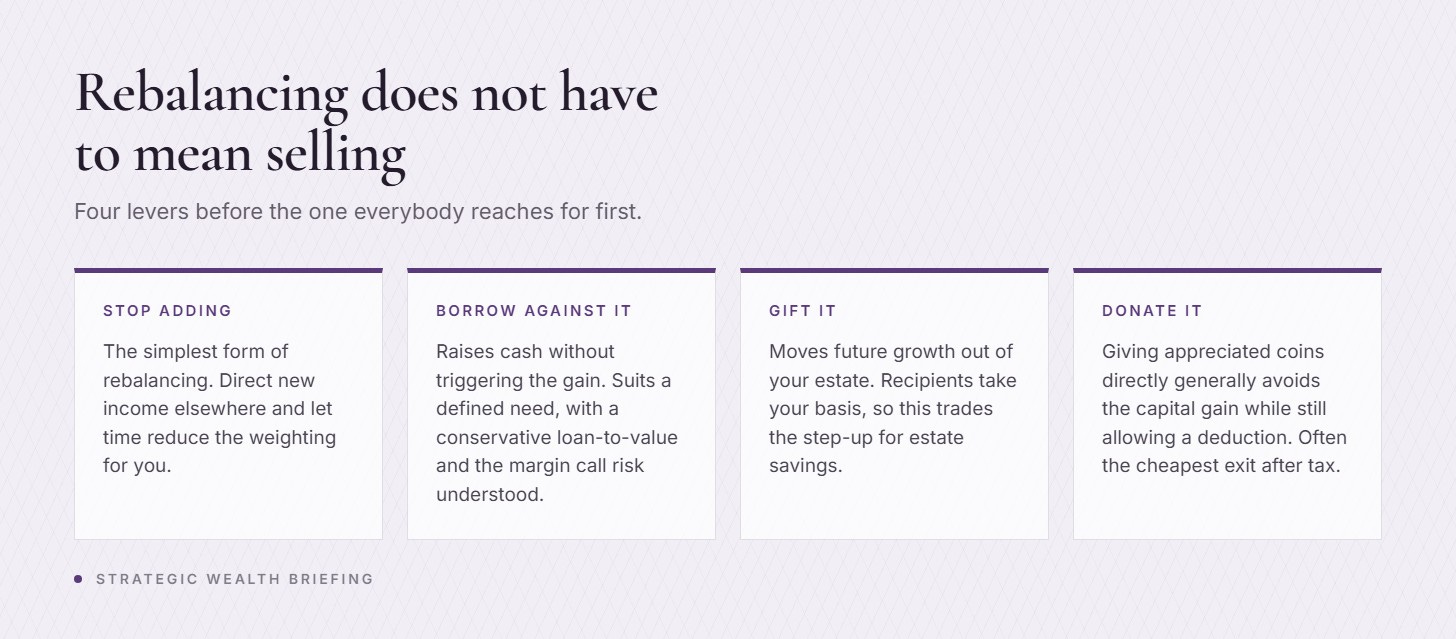
Rebalancing after a big crypto run-up: the levers that are not a taxable sale.
Why is concentration a problem you drifted into?
Because you never actually decided to hold it.
If someone offered you your current portfolio today, as a blank slate, would you build it that way? For a lot of holders after a strong run, the honest answer is no. They would not choose to have most of their wealth in one volatile asset. They simply have it, because it grew.
That is worth naming, because the drift version and the deliberate version feel the same day to day and are not the same risk. Deciding to hold a concentrated position with clear eyes is a legitimate choice. Holding it because you never revisited it is not a choice at all.
What is the right first move?
Build the team, then tell people. That order matters more than it sounds.
First, the professionals. An attorney, a CPA who genuinely handles digital assets, and an advisor who will look at the whole picture. Get them in place before you make moves you cannot unwind and before word spreads.
Then, the people close to you. Once there is a plan and someone to point questions at, conversations with family go better. Reversing that order puts you in the middle of every request with no structure to lean on.
A useful structure some families adopt has three layers: a small group of advisors for objective guidance, a family group for the decisions that affect everyone, and the professional team handling day-to-day execution. It keeps strategy, relationships, and operations from bleeding into each other.
Does rebalancing mean selling?
No, and this is the part people miss. Selling is one lever of several.
Stop adding. The simplest form of rebalancing is directing new income elsewhere and letting time do the work.
Borrow against it. Raises cash without triggering the gain. Useful for a defined need, with the margin call risk understood and a conservative loan-to-value.
Gift it. Moving appreciated assets to family or to a trust removes future growth from your estate. Recipients take your basis, so this trades the step-up for estate savings. Which side wins depends on your numbers.
Give it. Donating appreciated assets directly generally avoids the capital gain while still allowing a deduction. For a low-basis position this is often the cheapest exit of any of them after tax.
Sell in planned tranches. If you do sell, doing it deliberately across lots and tax years beats a single decision made in a strong or weak week.
If you sell, what actually matters?
Three things, in order.
Which lots. Basis is now tracked per wallet and account, so which units you sell and from where changes the tax. Decide that on purpose rather than letting a platform default choose.
Which year. Spreading a large sale across tax years can keep you out of the worst brackets. That planning has to happen before December, not after.
What offsets exist. Harvested losses, charitable deductions, and other planning can absorb a meaningful part of the gain. This is exactly the work a crypto-literate CPA earns their fee on.
What about family asking for money?
It comes up, and handling it well early prevents years of friction.
Gifts over loans. Loans between family members turn every future dinner into an implicit collections call. A gift ends cleanly. If the amount is meaningful, document it properly, including a gift tax return where required. Filing a return does not usually mean paying tax, it records the use of your lifetime exemption.
A formal process for investment requests. If relatives want backing for a business, require a real plan and run it through the same review as any other investment. That way a no is a process outcome rather than a personal rejection.
Boundaries stated once, in advance. Deciding your rules before the requests start is much easier than deciding under pressure with someone you love in the room.
A quick FAQ
How concentrated is too concentrated? There is no universal number. The useful test is whether a 60% or 70% drawdown would change your life. If it would, the position is running you.
Should I sell everything and diversify? Rarely the right answer, and it triggers the entire tax bill at once. Deliberate reduction over time usually beats a single decision.
Do I need new professionals? If your current CPA has not handled digital asset reporting, yes. The per-wallet basis rules alone make it a specialist job.
When should I set up entities and trusts? Before the next big move, not after. Structure built in advance works. Structure built in reaction to a claim or a sale often does not.
The short version
A big run-up hands you a portfolio you did not choose. The work now is deciding, on purpose, how much of it you actually want to keep.
Get the team in place first, use the levers that are not selling before the one that is, and put the gifting and family conversations on rails before the requests start arriving.